


If your 4C hair looks like it should be moisturized – but somehow still feels dry, stiff, or coated – you are not alone. Low porosity strands can make even the best routine feel like it is sitting on top of the hair instead of sinking in. One week your twist-out is fluffy, the next it is crunchy. Your scalp might feel fine, but your ends keep snapping.
That is the low-porosity puzzle: your hair is not “rejecting” moisture because it does not need it. It is just choosy about what it will let in, and it holds on to what gets trapped there.

What low porosity 4C hair actually needs
Low porosity means the cuticle layers lie flatter and resist swelling. On tight coils, that can look like shine and definition on wash day, then dryness by day three because water and conditioners did not fully absorb. It also means products can build up faster, especially heavy butters, waxes, and thick oils layered too often.
So the best low porosity 4C hair products do three things at once: they help water get in, they keep the cuticle flexible, and they avoid leaving a film that turns into stiffness.
Here is the trade-off that matters. Low porosity hair often loves lightweight hydration, but 4C hair still needs enough slip and cushion to reduce breakage. That means you are balancing absorption with protection, not choosing one.
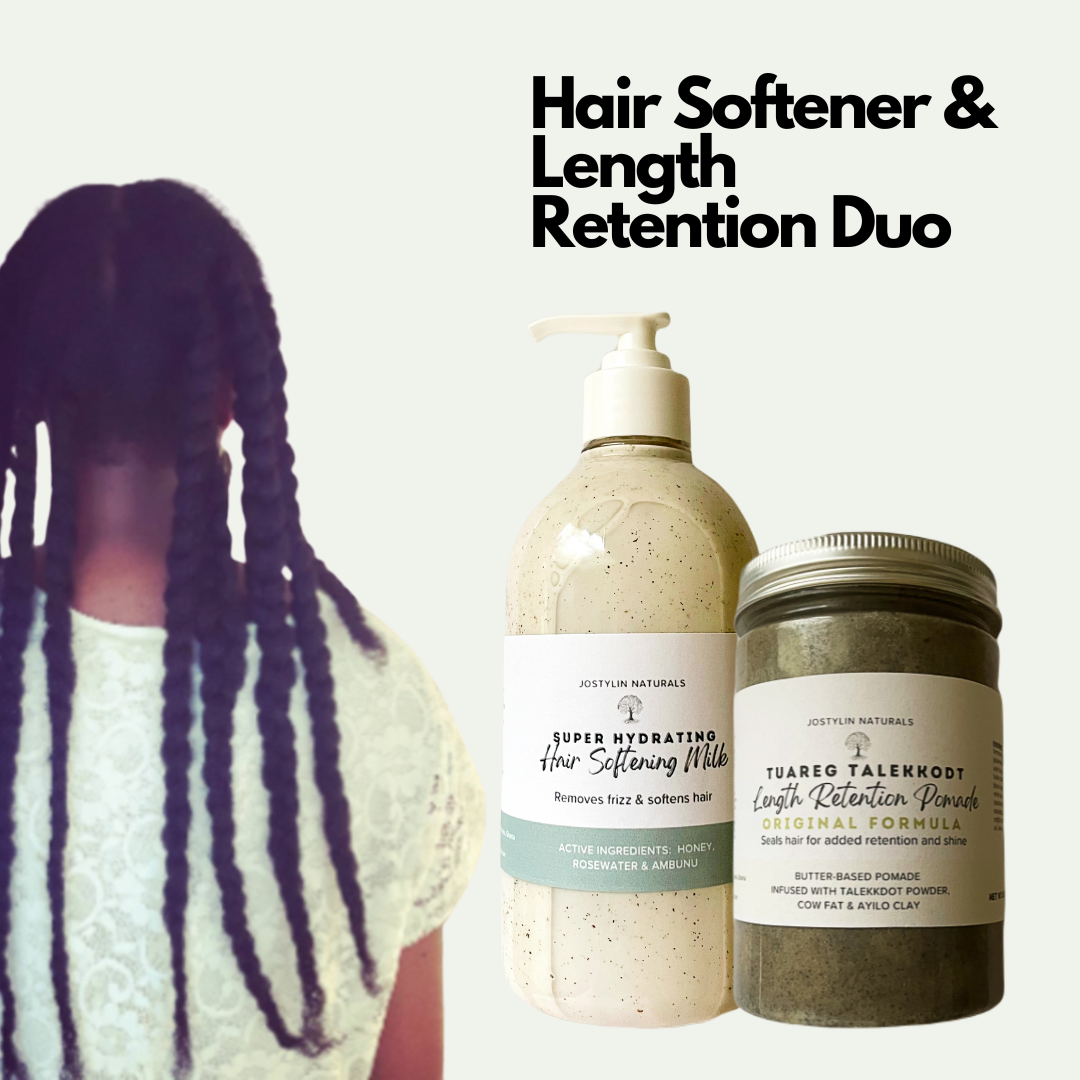
You should only moisturise your hair ONCE A WEEK with a very watery leave-in conditioner. You then follow up with a moisture retention pomade. I created the Jostylin Naturals Hair Softening milk and pomade duo for this exact reason.
Jostylin Naturals Hair Softening Milk & Length Retention Duo
How I choose low porosity 4C hair products (the apothecary way)
I shop like an apothecary, not like a trend-chaser. I start with the outcome, then I match ingredients and textures to that outcome.
For low porosity 4C hair, I look at:
1) Product texture and “finish”
If a product dries down tacky, waxy, or overly glossy, it is more likely to sit on the hair. If it dries down soft, touchable, and flexible, it is usually a better match.
Creamy conditioners with real slip, fluid leave-ins, and oils that feel light in the palm tend to play better with low porosity. Super thick whipped butters can work, but usually only in small amounts and typically only on ends.
2) Water first, always
Low porosity hair can look like it is “oily-dry.” That is usually product sitting on top of hair that never got properly hydrated. No oil replaces water. If you put oil on thirsty hair, you can lock in dryness.
3) Cleansing that actually resets the hair
A gentle cleanser is beautiful until it stops being enough. Low porosity hair usually needs a real reset regularly to clear buildup so conditioners can do their job. If your hair suddenly starts taking forever to get wet in the shower, that is your sign.
The core categories of low porosity 4C hair products
Most routines fail because people collect products randomly. I prefer a simple set that covers cleansing, conditioning, and sealing – and then I add targeted treatments only when the hair asks for it.
Cleansers: choose clean, not squeaky
Look for shampoos that remove residue without leaving the hair stiff. If your hair feels like straw right after rinsing, you will end up overloading it with heavy products later.
If you use gels, edge control, or lots of oil, add a clarifying wash when needed. It does not have to be weekly. For some people it is every 2-4 weeks. For others, it is whenever the hair starts repelling water.
Conditioners: slip + softness, not weight
Low porosity 4C hair often responds best to conditioners that rinse clean but still leave the hair pliable. You want slip for detangling, but you also want the hair to feel like it has movement after rinse-out.
If deep conditioners always leave a coated feeling, you may be leaving them on too long, using too much heat, or choosing formulas that are too heavy in butters and waxes. Deep conditioning should leave the hair softer, not “covered.”
Leave-ins: light layers win
Leave-in should feel like hydration support, not a cast. If your leave-in plus styler creates flakes, stiffness, or dullness, your hair is telling you the layers are not compatible.
For low porosity, I like leave-ins that feel fluid and spread easily. If your leave-in is thick, use less and apply it on soaking wet hair so it dilutes and distributes.
Oils and sealants: strategic, not automatic
Oil is not a requirement every day. For low porosity hair, oil is best used as a tool: to protect ends, reduce friction, and help retain moisture after water-based products are applied.
Heavier oils can sit on low porosity strands and make them feel coated. Lighter-feeling oils are often easier to work with. If you love richer oils, keep them for targeted use on ends, under wigs, or during protective styling.
Stylers: definition without crunch
Many 4C routines rely on gels and custards for definition. Low porosity hair can take definition well, but it can also get crunchy if the product is too drying or layered over too much oil.
If your twist-out feels hard, you may not need a new twist technique. You may need less product, fewer layers, or a styler that stays flexible.
Heat and steam: the quiet advantage for low porosity 4C hair
Low porosity hair often responds beautifully to gentle heat because it encourages the cuticle to lift slightly, allowing water and conditioning agents to get in. That does not mean you need a complicated setup.
A warm towel wrap over a deep conditioner, a hooded dryer on low, or even the natural warmth of a shower cap can make the difference between “product sitting there” and “hair actually soft.”
It depends on your hair’s sensitivity. If your strands are fine or color-treated, keep heat low and timing shorter. If your hair is coarse and strong, you can usually tolerate a little more warmth.
A simple regimen that makes low porosity products work harder
I do not believe low porosity hair needs a long routine. It needs a consistent one.
Wash day: cleanse, condition, then set the base
Start by fully saturating your hair with water. If it takes time, let it take time. Then cleanse in sections if you have to. Follow with a rinse-out conditioner for slip.
Deep condition when your hair feels stiff, tangly, or rough, or when you are coming out of a style. Add gentle heat if you can.
After washing: apply leave-in on very wet hair
This is where low porosity hair changes. Apply your leave-in while the hair is still wet enough to drip a little. That water helps the product spread and reduces the risk of buildup.
Then seal lightly. If you are using an oil, use a small amount and focus on ends. If you are using a cream, use less than you think.
Midweek: refresh with water, not more product
If your hair feels dry on day three, refresh with water first. Mist, smooth, and let it dry. If you need extra softness, add a tiny amount of leave-in to your hands and smooth it over the outside of the twists or braids.
If your hair only feels dry on the surface but still feels pliable underneath, that is often buildup or weather, not true dehydration.
Ingredients and textures that tend to work (and what can backfire)
Low porosity 4C hair does not have a universal “do not use” list, but there are patterns.
Lightweight humectants and conditioning agents can help hair feel hydrated without heaviness. Botanical oils can be beautiful when they are used as finishers, not the foundation.
What often backfires is layering too many rich products. Thick butters, heavy pomades, and waxy formulas can make hair feel protected at first, then dry and dull over time because water cannot get through the coating.
The other sneaky issue is protein overload. Some low porosity heads love occasional protein for strength. Others get hard and brittle fast. If your hair feels stiff right after conditioning, check whether you are stacking protein products back-to-back.
When your “low porosity” is really buildup
Sometimes people label their hair low porosity because water beads up on the strands. That can be true porosity, but it can also be product residue.
If your hair used to accept moisture and now it does not, do a reset wash. Then test again. If your hair absorbs water better after clarifying, you were fighting buildup, not your cuticle structure.
Shopping smart: building your product wardrobe
If you are buying low porosity 4C hair products, buy them like a wardrobe. You want a few reliable basics and a couple of specialty pieces.
Your basics are your cleanser, rinse-out conditioner, leave-in, and a light sealant. Your specialty products are your deep conditioner, a clarifier, and a styler that works with your climate.
If you are the kind of person who loves rare tropical botanicals in your routine, choose them where they matter most: in oils and treatments that support scalp comfort, reduce breakage, and help you retain length. I keep my own stash and shop my apothecary-style hair and botanical collections at https://jostylin-naturals.com when I want ingredients that are hard to find and worth building a regimen around.
The real goal: soft hair that stays strong
Low porosity 4C hair products are not about forcing absorption. They are about making the hair receptive, then keeping it flexible. When your routine is right, you stop chasing moisture and start keeping it.
Tonight, if you do one thing, let it be this: wet your hair thoroughly, use one good conditioner, and apply your leave-in on soaking wet strands. Let the results guide your next purchase, not someone else’s shelfie.
